Introduction :The Construction Industry Is Becoming Digital
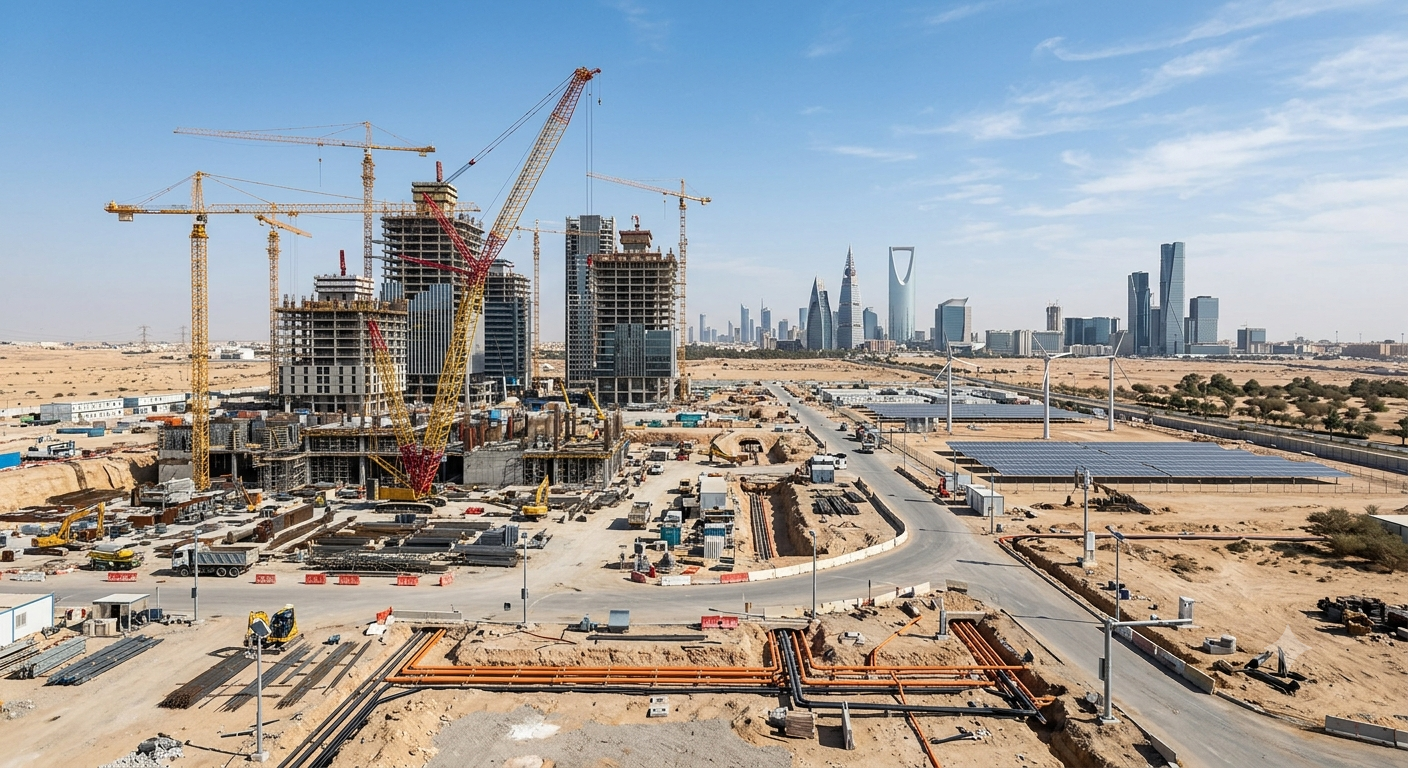
Construction in the UAE and Middle East is no longer defined by traditional engineering alone. It is now driven by data, automation, and intelligent systems that are reshaping how cities are planned and built.
Cities like Dubai and Abu Dhabi are leading a major shift toward smart urban ecosystems where infrastructure is connected, monitored, and optimized in real time.
This transformation is not futuristic anymore—it is already happening across major GCC construction projects.
What Smart Cities Mean in 2026
A smart city is an urban environment that uses advanced technologies like AI, IoT, sensors, and digital platforms to manage infrastructure efficiently.
Key elements include:
- Real-time data collection from infrastructure
- AI-powered decision systems
- Connected transportation and utilities
- Digital construction planning using BIM
In regions like the UAE and Saudi Arabia, smart cities are becoming the foundation of national development strategies.
How Smart Cities Are Transforming Construction Methods
Smart cities are completely changing how construction projects are executed.
Instead of manual planning and reactive decision-making, companies now use:
- Predictive analytics for project timelines
- AI-based design optimization
- Drone surveying for site mapping
- Automated machinery for construction tasks
- Digital twins for project simulation
This reduces errors, improves speed, and increases overall project efficiency.
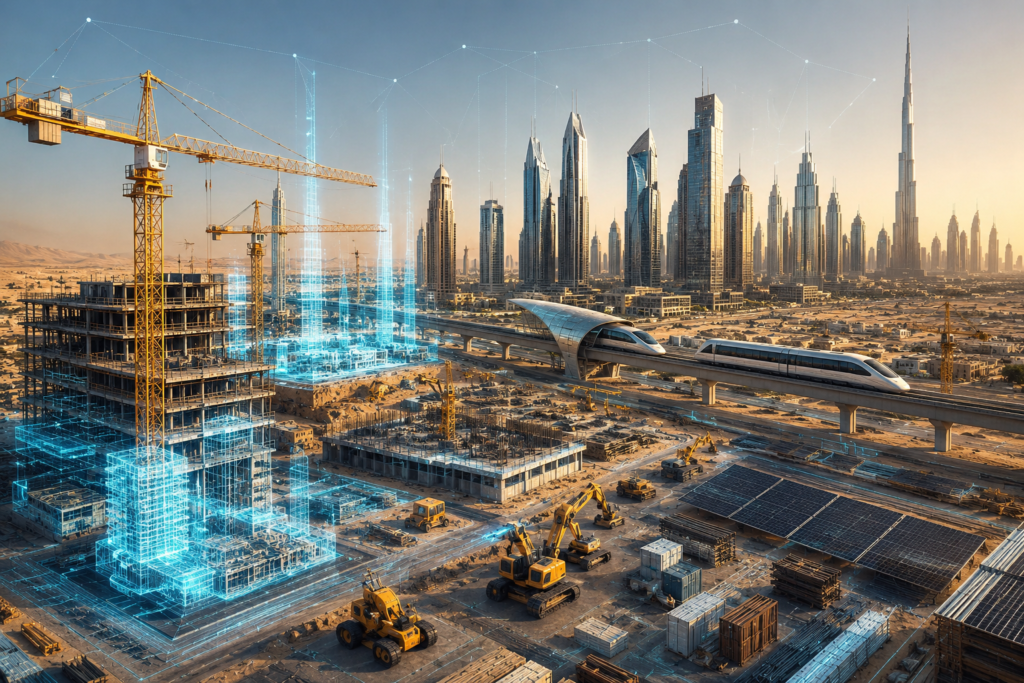
Key Technologies Driving Smart Construction in the Middle East
The construction revolution is powered by advanced technologies:
- Artificial Intelligence (AI) for planning and forecasting
- Internet of Things (IoT) for real-time site monitoring
- Building Information Modeling (BIM) for digital design
- Digital twins for virtual infrastructure simulation
- Robotics for automated construction work
These technologies are now essential in major infrastructure projects across the GCC.
🇦🇪 UAE: A Global Leader in Smart Construction
The UAE has positioned itself as a global hub for smart city development.
Dubai is integrating AI into urban planning, traffic systems, and construction management. Meanwhile, Abu Dhabi continues to expand smart infrastructure projects focused on sustainability and efficiency.
These cities are not just building structures—they are building intelligent ecosystems.
🇸🇦 Saudi Arabia and the Future of Mega Smart Cities
Under rapid national transformation, Saudi Arabia is investing heavily in smart construction systems aligned with large-scale development goals.
Cities like Riyadh are evolving into digitally connected urban centers.
Saudi Vision 2030 is driving massive infrastructure innovation, focusing on smart, sustainable, and technology-driven cities.
Impact on Construction Companies and Workforce
Smart cities are reshaping the construction workforce and industry structure.
Major changes include:
- Shift from manual labor to digital engineering roles
- Increased demand for AI and BIM specialists
- Use of real-time project management platforms
- Greater reliance on data-driven decision-making
Construction companies that adapt quickly are gaining a strong competitive advantage.
Sustainability in Smart Construction
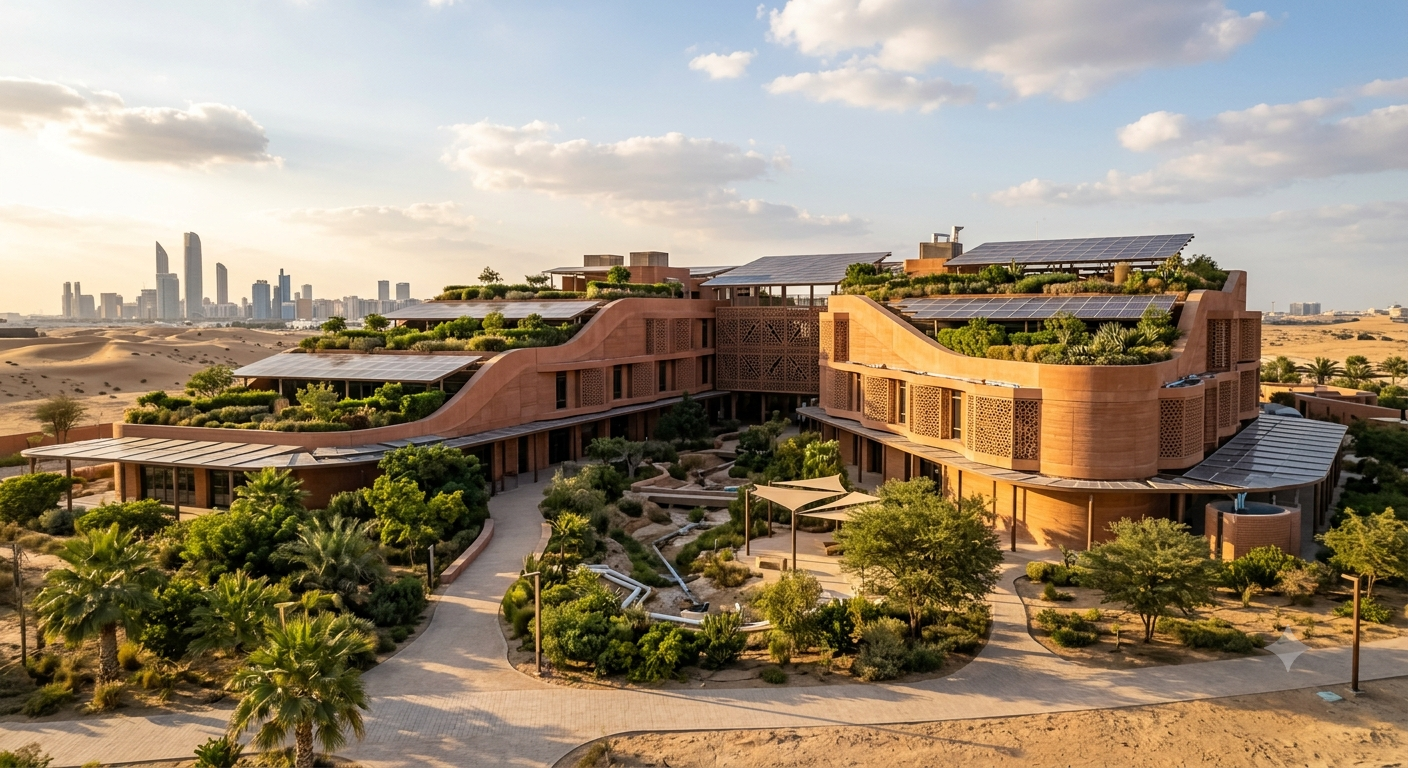
Sustainability is a core pillar of smart cities in the Middle East.
Key improvements include:
- Reduced energy consumption through smart systems
- Environmentally optimized building designs
- Water-efficient infrastructure
- Lower carbon emissions through digital planning
Smart construction ensures development is not only fast but also environmentally responsible.
Challenges in Smart City Construction
Despite rapid progress, several challenges still exist:
- High cost of advanced technologies
- Shortage of skilled digital professionals
- Integration issues between old and new systems
- Regulatory adaptation delays in some regions
These challenges require long-term strategic planning and investment.
Future Outlook: Construction in 2030 and Beyond
The future of construction in the Middle East is heading toward:
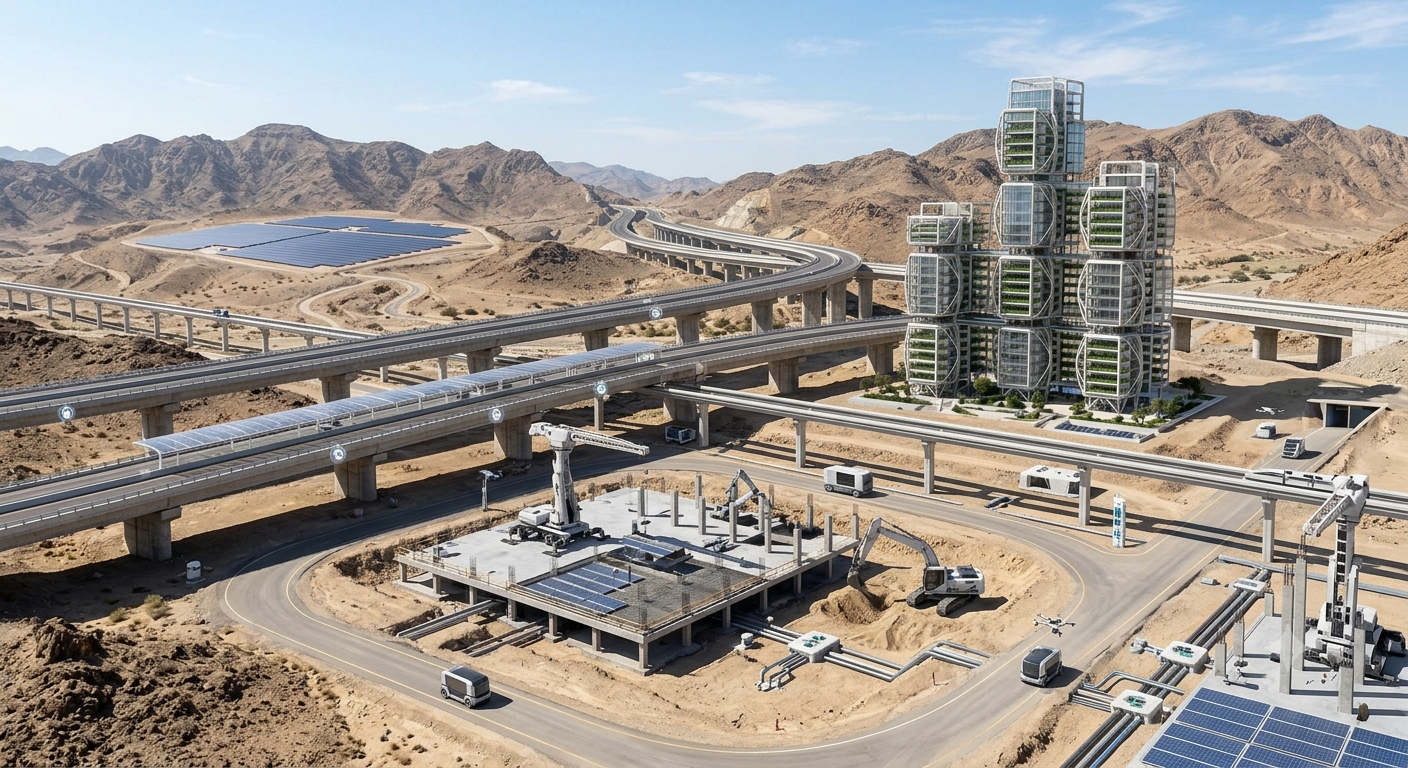
- Fully automated construction sites
- AI-managed urban planning systems
- Real-time digital twin city monitoring
- Zero-waste sustainable construction processes
By 2030, smart cities will no longer be innovation projects—they will become the standard model of urban development.
FAQ Section
What is a smart city in construction?
A smart city uses AI, IoT, and digital systems to manage infrastructure efficiently.
Why is the UAE leading smart construction?
Due to strong investment, innovation policies, and large-scale infrastructure projects.
How does AI improve construction?
AI improves planning, reduces delays, and enhances project accuracy.
What is the biggest challenge in smart construction?
High implementation costs and lack of skilled digital workforce.
Conclusion
Smart cities are no longer just long-term visions in the UAE and Middle East—they are actively reshaping how construction projects are planned, managed, and delivered in real time. The integration of AI, IoT, BIM, and digital infrastructure is pushing the industry away from traditional methods toward a fully connected and data-driven construction ecosystem.
Countries like the UAE and Saudi Arabia are setting global benchmarks by embedding smart technologies into large-scale urban developments, improving efficiency, safety, and sustainability at every stage of construction. At the same time, the shift is redefining workforce skills, industry standards, and project delivery models.
As the region moves closer to 2030 development goals, smart construction will become the default approach rather than an innovation. The future belongs to cities that can think, adapt, and optimize themselves—and the Middle East is already building that reality today.