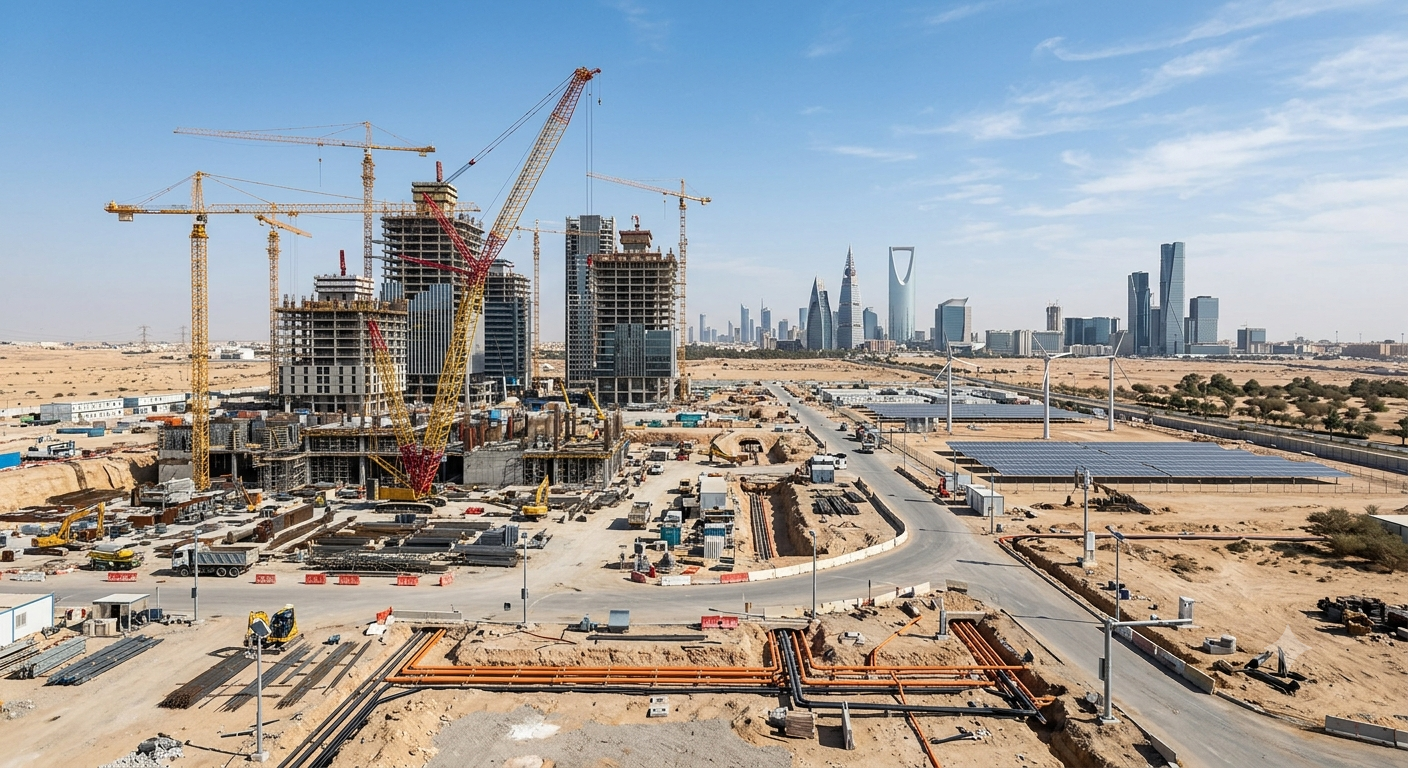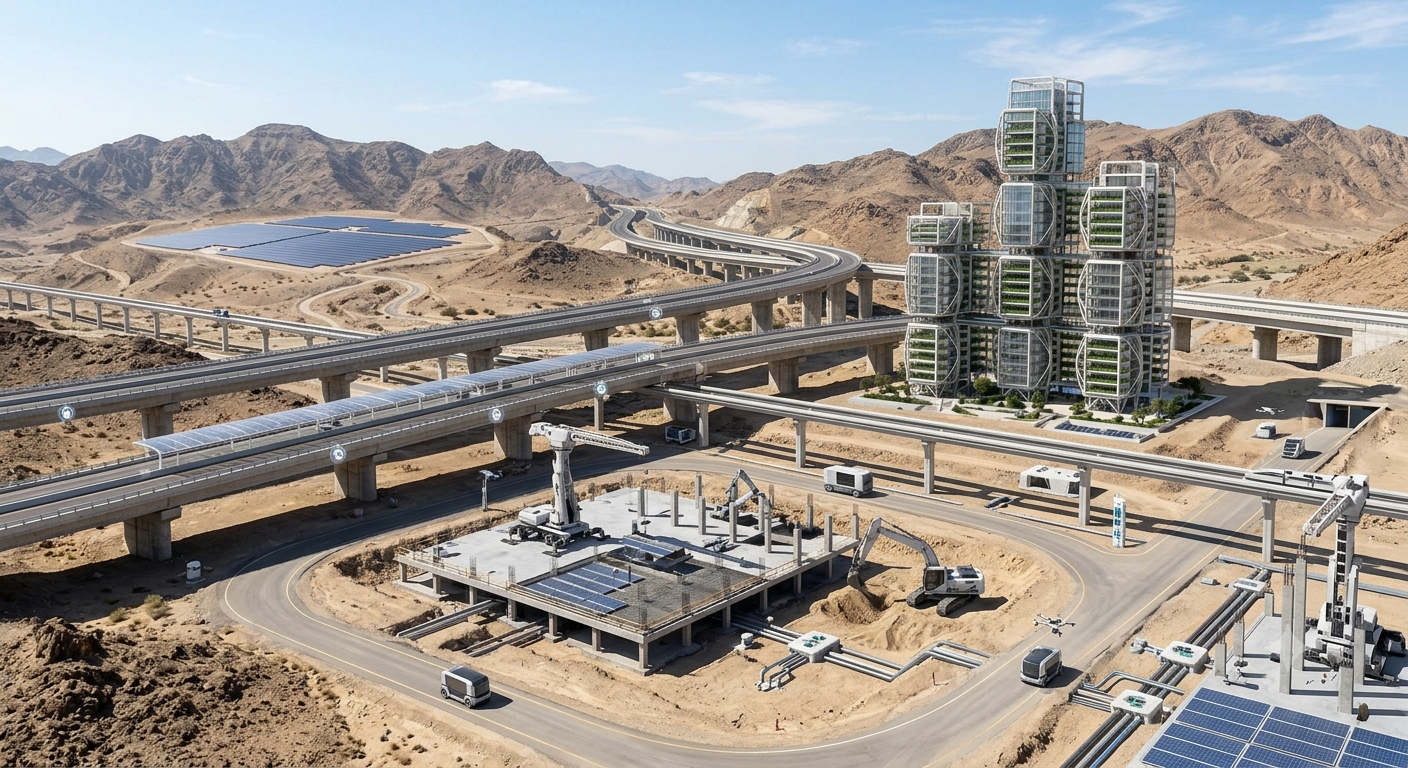
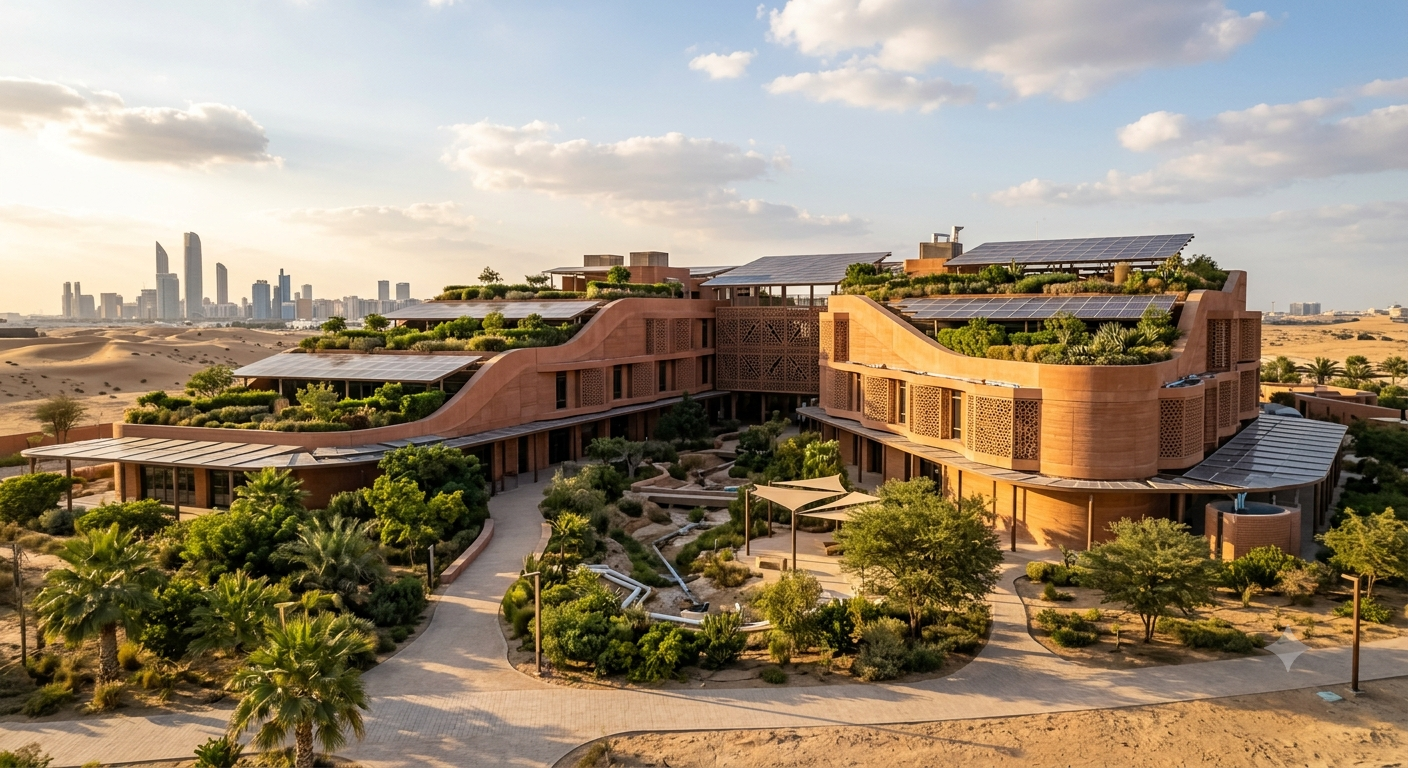
Sustainable architecture in the Middle East is no longer an optional design approach—it has become a strategic necessity driven by climate pressure, rapid urban expansion, and national visions such as UAE Net Zero 2050 and Saudi Vision 2030. As cities across the GCC continue to grow, architects and engineers are rethinking how buildings are designed, constructed, and operated in extreme desert conditions.
Why Sustainable Architecture Matters in the Middle East
The Middle East faces some of the most demanding environmental conditions for construction. Extreme heat, limited freshwater resources, and high energy consumption make traditional building methods unsustainable in the long term.
Sustainable architecture addresses these challenges by:
- Reducing energy demand through efficient design
- Improving indoor thermal comfort without heavy mechanical cooling
- Lowering carbon emissions in construction and operation
- Supporting long-term economic and environmental resilience
Governments across the region are now prioritizing sustainability as a core development principle rather than a design trend.
Environmental Challenges in Desert Regions
Designing buildings in the GCC comes with unique constraints:
- Extreme summer temperatures increase cooling loads
- High humidity in coastal cities affects material durability
- Water scarcity limits landscaping and building operations
- Dust and sand impact building envelopes and systems
These conditions push architects toward climate-responsive architecture, where design is directly shaped by environmental behavior rather than aesthetic preference.
Government Sustainability Initiatives
Sustainability in the Middle East is strongly driven by national programs:
- UAE Energy Strategy 2050 aims to reduce carbon emissions and improve clean energy usage
- Saudi Vision 2030 integrates sustainable urban development into mega projects like NEOM
- Qatar National Vision 2030 focuses on environmental balance and responsible growth
These frameworks are accelerating adoption of green building regulations, certifications, and smart infrastructure.
UAE Net Zero Strategy
The UAE is one of the regional leaders in sustainable construction. Key developments include:
- Net Zero 2050 strategic initiative
- Expansion of renewable energy projects like solar parks
- Mandatory green building codes in Dubai and Abu Dhabi
- Estidama Pearl Rating System for sustainable development
Cities like Dubai are integrating sustainability into both commercial towers and residential communities.
Saudi Vision 2030 and Sustainable Cities
Saudi Arabia is reshaping architecture through large-scale sustainable developments:
- NEOM smart city designed as a zero-carbon urban model
- The Line project focusing on car-free, energy-efficient living
- Green building requirements for new infrastructure projects
These initiatives combine smart city technology, renewable energy, and AI-driven urban planning to redefine desert living.
Smart Cities and Digital Transformation
Smart cities are central to sustainable architecture in the region.
Key technologies include:
- IoT-based building management systems
- AI-driven energy optimization
- Smart grids for electricity distribution
- Real-time environmental monitoring
These systems reduce waste, improve efficiency, and enhance occupant comfort.
AI in Sustainable Architecture
Artificial Intelligence is transforming building design by:
- Optimizing building orientation for solar control
- Predicting energy consumption patterns
- Enhancing HVAC system efficiency
- Supporting generative design solutions
AI enables architects to simulate thousands of design variations before construction begins.
BIM and Digital Twins
Building Information Modeling (BIM) and Digital Twins are becoming essential tools.
They allow:
- Real-time project visualization
- Energy performance simulation
- Lifecycle management of buildings
- Reduced construction errors and waste
Digital Twins are especially valuable in smart cities where infrastructure is continuously monitored and optimized.
Passive Cooling Design Strategies
Passive design is critical in hot climates like the GCC.
Common techniques include:
- Shading devices and deep window recesses
- Courtyards that promote natural airflow
- Wind towers adapted from traditional Islamic architecture
- High thermal mass materials
These reduce dependency on air conditioning systems.
Renewable Energy Integration
Solar energy dominates sustainable architecture in the region due to high solar exposure.
Key applications:
- Building-integrated photovoltaic (BIPV) systems
- Rooftop solar panels in residential and commercial buildings
- Solar-powered street infrastructure in smart cities
This significantly reduces operational carbon emissions.
Water Conservation Strategies
Water efficiency is a critical design priority.
Solutions include:
- Greywater recycling systems
- Low-flow plumbing fixtures
- Smart irrigation systems
- Rainwater harvesting (limited but growing in adoption)
These systems are essential in water-scarce environments.
Green Building Materials and Circular Construction
Material innovation is shaping modern construction:
- Low-carbon concrete alternatives
- Recycled steel and aluminum
- Locally sourced sustainable materials
- Modular and prefabricated components
Circular construction models focus on reducing waste and extending material life cycles.
Net-Zero and Climate-Resilient Buildings
Net-zero buildings aim to balance energy consumption with renewable production.
Key features:
- Energy-efficient envelopes
- Smart energy management systems
- Renewable integration
- High-performance insulation
Climate-resilient architecture ensures buildings withstand extreme heat, sandstorms, and humidity over time.
Biophilic and Healthy Building Design
Modern architecture increasingly focuses on human wellbeing:
- Integration of natural elements indoors
- Green walls and indoor gardens
- Natural lighting optimization
- Improved air quality systems
These features enhance productivity and occupant health.
Cost vs Long-Term Value
Sustainable buildings often have higher initial costs, but long-term benefits include:
- Lower energy and water bills
- Reduced maintenance costs
- Higher property value
- Compliance with future regulations
Investors are increasingly viewing sustainability as a financial advantage, not a cost burden.
Challenges Facing Sustainable Architecture
Despite progress, challenges remain:
- High upfront construction costs
- Limited awareness in smaller markets
- Extreme climate limitations
- Supply chain constraints for green materials
However, government incentives and technology adoption are steadily reducing these barriers.
Future Trends (2026–2035)
The next decade will shape architecture in the Middle East through:
- Fully AI-driven building design systems
- Large-scale net-zero urban districts
- 3D-printed construction at commercial scale
- Autonomous smart infrastructure
- Carbon-neutral mega projects
Sustainability will shift from “innovation” to baseline requirement.
FAQs
What is sustainable architecture in the Middle East?
It is the design of buildings that reduce energy use, conserve water, and respond to extreme desert climates.
Why is sustainable architecture important in the GCC?
Due to extreme heat, water scarcity, and high energy demand, sustainable design ensures long-term efficiency.
What technologies are used in sustainable architecture?
AI, BIM, Digital Twins, smart sensors, and renewable energy systems.
Which countries lead sustainable architecture in the region?
The UAE and Saudi Arabia are leading through national sustainability strategies and mega projects.
Conclusion
Sustainable architecture in the Middle East is evolving rapidly due to climate necessity, government policy, and technological innovation. From AI-driven design to net-zero cities, the region is becoming a global testing ground for future-ready construction.
The shift is clear: buildings are no longer just structures—they are intelligent systems designed to reduce environmental impact while improving human life.