Introduction
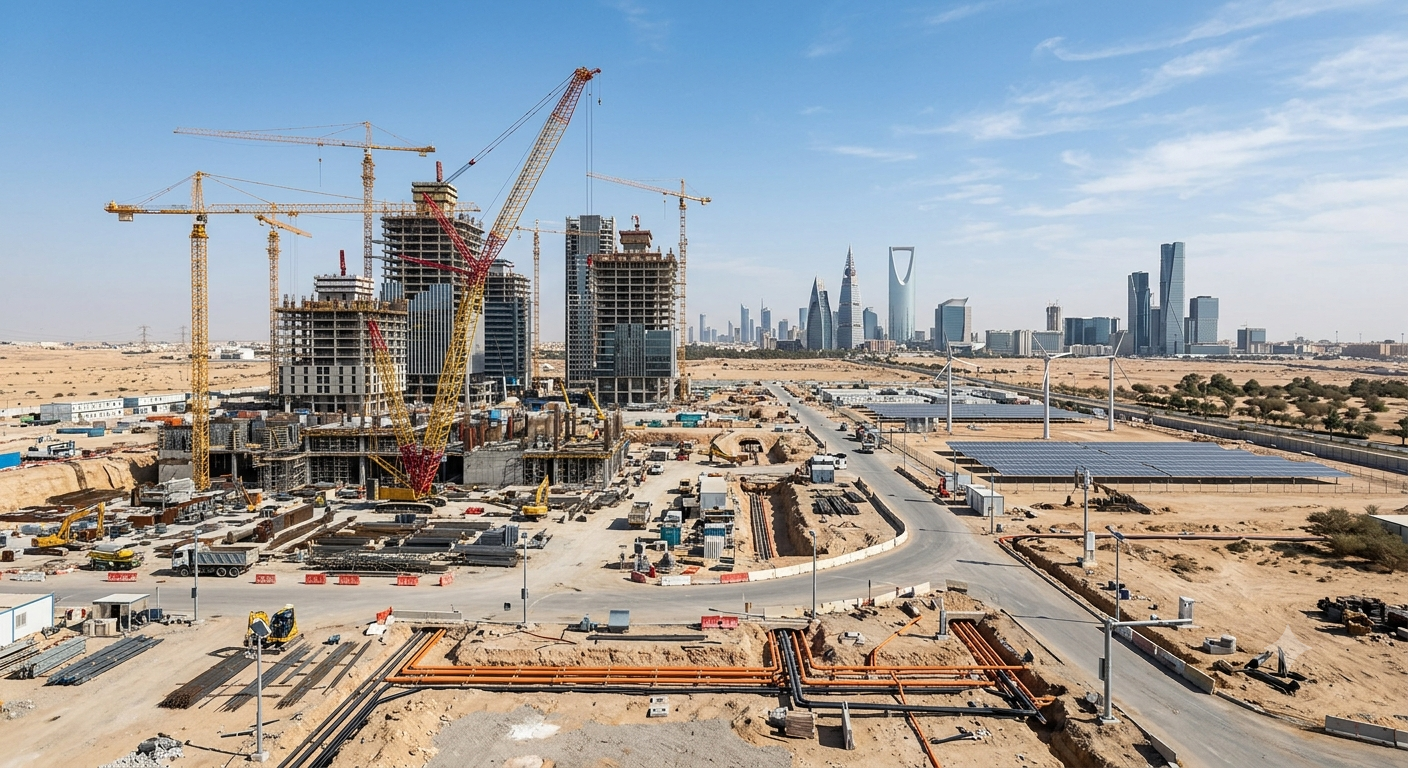
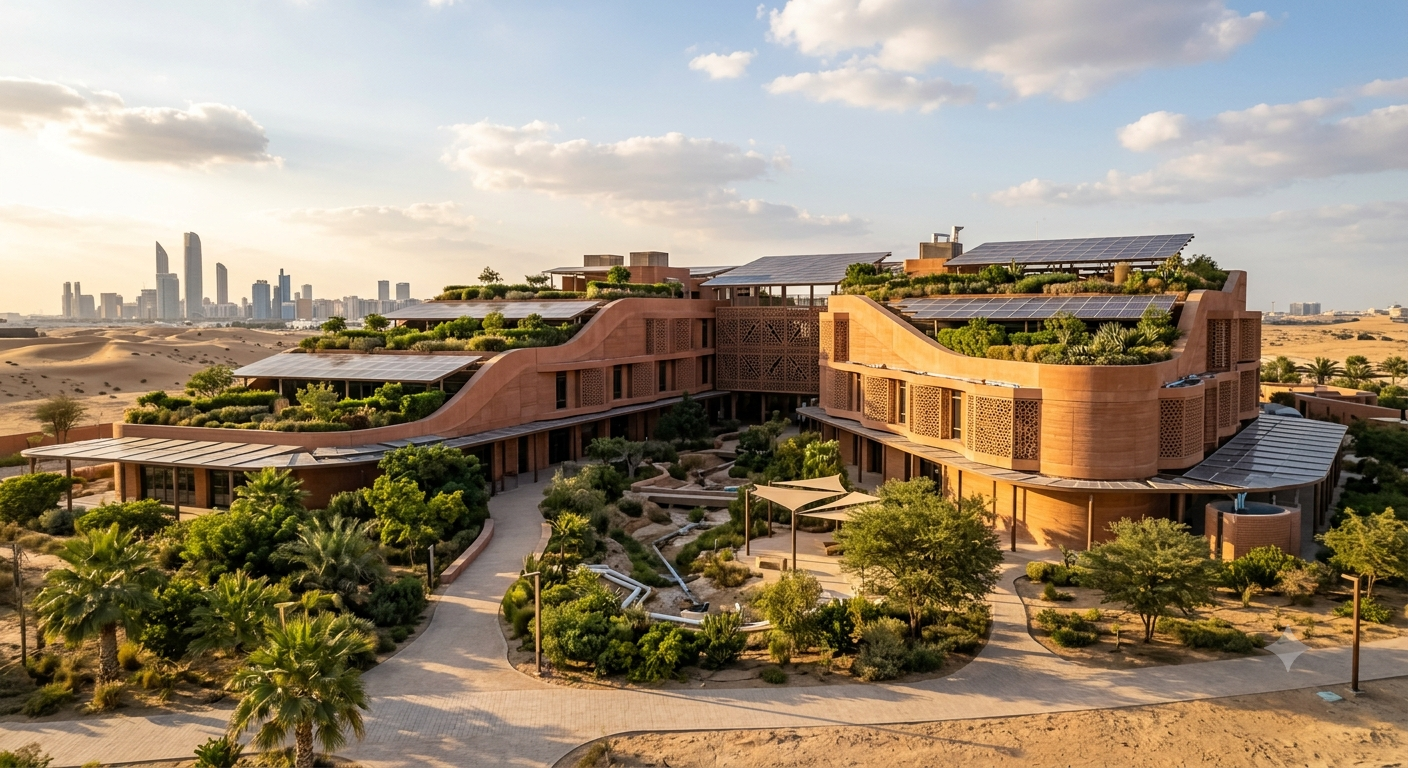
Across the Middle East, infrastructure is no longer just about scale. It is about survival over time.
High temperatures, coastal humidity, saline groundwater, and rapid urban expansion are exposing a fundamental weakness in traditional construction: concrete cracking. Once cracks form, they quietly open pathways for water, chlorides, and carbon dioxide to reach steel reinforcement. The result is corrosion, structural weakening, and rising maintenance costs that often exceed initial construction budgets over a structure’s lifetime.
This is where self-healing concrete is shifting from research labs into serious engineering conversations.
Not as a futuristic concept—but as a potential infrastructure standard for the next generation of GCC mega projects.
Why Infrastructure Durability Is Becoming a Critical Issue
In the Gulf region, infrastructure operates under extreme environmental pressure:
- Daytime surface temperatures exceeding 50°C in summer
- Large daily thermal fluctuations causing expansion and contraction
- Coastal salt exposure accelerating reinforcement corrosion
- Dust and sand abrasion affecting surface durability
- High groundwater salinity in coastal foundations
These conditions don’t destroy concrete instantly. They degrade it slowly.
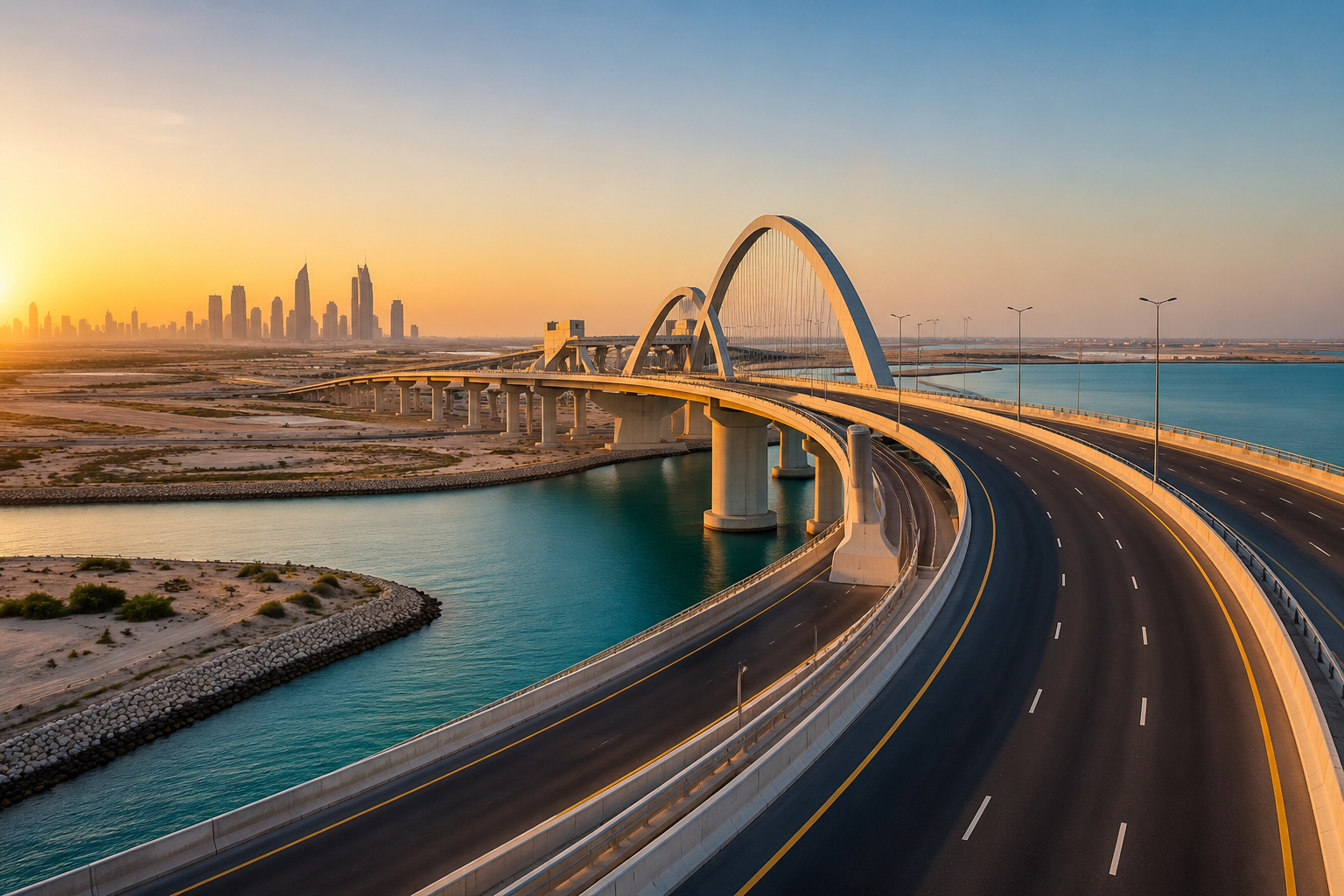
A bridge deck in Dubai, a tunnel in Riyadh, or a coastal structure in Abu Dhabi may look structurally sound in its early years—but microcracks begin forming almost immediately after curing due to shrinkage, thermal stress, and load cycles.
Once cracks exceed 0.1 mm, durability risk increases sharply.
Traditional maintenance approaches rely on inspections, patch repairs, injection grouting, and partial replacements. These methods are expensive, disruptive, and often reactive rather than preventive.
Self-healing concrete attempts to change that logic entirely.
What Is Self-Healing Concrete?
Self-healing concrete is a cement-based composite material designed to automatically repair microcracks without human intervention.
Instead of waiting for damage to be detected and repaired, the material activates internal healing mechanisms when cracks form.
The goal is simple:
Extend structural lifespan while reducing maintenance frequency and lifecycle cost.
At its core, self-healing concrete introduces “healing agents” into the cement matrix that remain inactive until cracking occurs.
When cracks allow moisture or air to enter, these agents react and seal the damage.
Why Concrete Cracks in the First Place
To understand self-healing systems, it is important to understand failure.
Concrete cracks due to:
1. Plastic shrinkage
Rapid evaporation of water during early curing.
2. Thermal stress
Expansion and contraction due to temperature variation.
3. Structural load
Repeated traffic loads, wind forces, and seismic activity.
4. Chemical attack
Chlorides, sulfates, and carbonation entering the concrete.
5. Creep and fatigue
Long-term deformation under sustained stress.
Cracks are not always a sign of failure—but they are always a gateway to deterioration.
The Science Behind Self-Healing Concrete
Self-healing concrete is not one technology. It is a family of systems.
1. Biological (Bacterial) Self-Healing
This is the most widely studied system.
Bacteria such as Bacillus species are embedded in concrete in a dormant state. When water enters a crack, the bacteria activate and produce calcium carbonate (limestone).
This naturally seals the crack.
Key mechanism:
- Bacteria + water + nutrients → calcium carbonate precipitation
- Crack gets filled with limestone-like material
Why it matters:
It mimics natural geological healing processes.
2. Capsule-Based Healing
Microcapsules containing healing agents are mixed into concrete.
When cracks form:
- Capsules rupture
- Healing resin is released
- Crack is filled and sealed
This system is widely used in experimental bridge decks and coatings.
3. Vascular Systems
Inspired by human biology.
Concrete contains tiny hollow channels (like blood vessels) filled with healing fluid.
When cracks occur:
- Fluid flows into the damaged zone
- Chemical reaction seals the crack
This system is complex but highly promising for large infrastructure.
4. Mineral-Based Healing
This relies on unhydrated cement particles.
When water enters a crack:
- Remaining cement hydrates
- Produces new binding material
- Crack partially seals itself
This is the simplest and most cost-effective mechanism.
5. Polymer-Based Systems
Polymers embedded in concrete expand when exposed to air or moisture, sealing cracks.
These are often used in combination with fiber-reinforced systems.
Types of Self-Healing Concrete in Practice
| Type | Mechanism | Maturity Level |
|---|---|---|
| Bacterial | Biological precipitation | Medium |
| Capsule-based | Chemical release | High experimental |
| Vascular | Fluid circulation | Research stage |
| Mineral-based | Continued hydration | Commercial-ready |
| Polymer-based | Expansion reaction | Semi-commercial |
Why the Middle East Is a Key Testing Ground
The GCC region presents a unique combination of stress factors:
- Extreme heat cycles
- Coastal infrastructure exposure
- Mega-scale construction programs
- Long service life expectations (50–100 years)
- Sustainability mandates (Net Zero goals)
Projects such as:
- Saudi Vision 2030 developments
- NEOM smart city
- Dubai mega infrastructure expansion
- Abu Dhabi coastal infrastructure upgrades
require materials that reduce maintenance dependency.
Self-healing concrete fits directly into this requirement.
Applications Across Infrastructure Systems
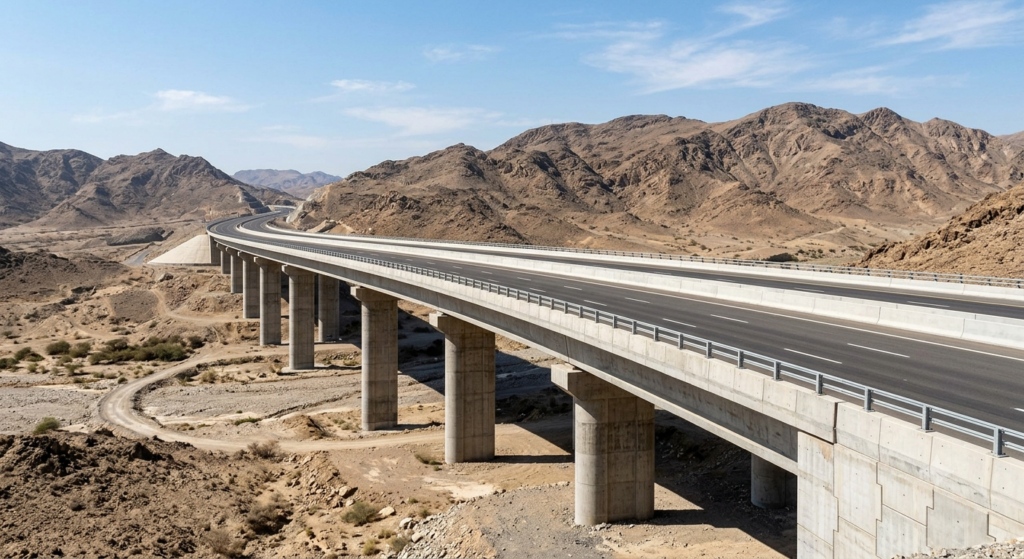
1. Bridges and highways
Reduces crack propagation caused by traffic loads and thermal movement.
2. Marine structures
Protects against chloride penetration and saltwater corrosion.
3. Tunnels and metro systems
Minimizes water leakage and structural degradation.
4. Airports
Improves durability of runways exposed to heavy cyclic loading.
5. High-rise buildings
Reduces maintenance of structural cores and basements.
6. Water infrastructure
Enhances durability of reservoirs, pipelines, and treatment plants.
Lifecycle Cost Advantage
The real value of self-healing concrete is not in construction—it is in maintenance reduction.
Traditional concrete systems:
- Low initial cost
- High maintenance over time
Self-healing systems:
- Higher initial cost
- Lower lifecycle cost
In infrastructure planning, up to 70% of total cost can come from maintenance.
Even a 20–30% reduction in repair frequency significantly changes long-term financial models.
Environmental Impact
Self-healing concrete contributes to sustainability in three ways:
1. Reduced cement demand
Less repair work means fewer new materials.
2. Lower carbon emissions
Cement production is one of the largest CO₂ sources globally.
3. Extended lifecycle
Fewer demolitions and reconstructions.
For GCC countries targeting net-zero transitions, this aligns with national sustainability frameworks.
Performance in Desert and Coastal Conditions
Desert environments
- High thermal cycling
- UV exposure
- Drying shrinkage
Self-healing systems help reduce microcrack expansion caused by thermal stress.
Coastal environments
- Chloride attack
- Reinforcement corrosion
- Moisture ingress
Bacterial and capsule-based systems are particularly effective in sealing moisture pathways.
Challenges and Limitations
Despite its promise, adoption faces barriers:
- High initial material cost
- Limited large-scale field data
- Uncertainty in long-term bacterial survival
- Complexity in manufacturing processes
- Lack of standardized codes and regulations
For GCC adoption, regulatory acceptance will be as important as technical performance.
Future Outlook in the Middle East
The next decade will likely define whether self-healing concrete becomes:
- A niche specialty material
or - A mainstream infrastructure standard
Key drivers pushing adoption:
- Smart city development
- Climate resilience planning
- Infrastructure lifecycle optimization
- Digital construction integration (AI + materials science)
As construction moves toward data-driven asset management, materials that reduce human intervention will gain strategic importance.
Self-healing concrete sits directly at this intersection.
Key Takeaways
- Concrete cracking is unavoidable—but damage progression can be controlled
- Self-healing concrete introduces autonomous repair mechanisms
- Multiple technologies exist: biological, capsule, vascular, mineral, polymer
- The Middle East is a high-potential region due to extreme environmental conditions
- Lifecycle cost savings may outweigh higher initial investment
- Sustainability goals strongly support adoption
Expert Perspective
Self-healing concrete should not be viewed as a replacement for traditional materials today, but as an evolution of durability engineering. Its biggest value lies in reducing uncertainty in long-term infrastructure performance.
Future Outlook for the Middle East
Over the next 10–20 years, adoption is expected to grow in:
- Smart cities
- Coastal infrastructure
- Transport networks
- High-value government projects
Early adoption will likely occur in pilot projects before broader regulatory integration.
Frequently Asked Questions
1. What is self-healing concrete?
A material that can automatically repair small cracks using internal healing mechanisms.
2. Is self-healing concrete commercially available?
Yes, but mostly in pilot or specialized applications.
3. How does bacterial concrete work?
Bacteria produce calcium carbonate that seals cracks.
4. Is it suitable for hot climates?
Yes, especially for reducing thermal crack expansion.
5. Does it reduce maintenance costs?
Yes, significantly over lifecycle use.
6. Can it replace traditional concrete?
Not yet, but it can enhance it.
7. Is it environmentally friendly?
Yes, it reduces repair frequency and cement usage.
8. Where can it be used?
Bridges, tunnels, marine structures, and smart cities.
Conclusion
Self-healing concrete is an emerging material that can repair its own microcracks, improving durability and reducing long-term maintenance needs. For the Middle East, where infrastructure faces extreme heat, coastal corrosion, and heavy load demands, it offers a practical solution for extending service life and lowering lifecycle costs.
While the technology is still developing and not yet widely adopted, early research and pilot projects show strong potential. Its ability to improve resilience and support sustainability goals makes it a promising option for future smart cities and mega infrastructure projects across the GCC.
Overall, self-healing concrete points toward a future where infrastructure is not only built to last—but also designed to maintain itself.