

Introduction
Artificial intelligence is rapidly transforming industries around the world, and construction is no exception. From project planning and design to site monitoring and asset management, AI-driven technologies are changing how projects are delivered, managed, and maintained. As digital transformation accelerates, the most successful construction professionals will be those who combine traditional engineering expertise with modern technology skills.
Understanding The Most In-Demand Construction Skills in the Era of Artificial Intelligence has become essential for engineers, project managers, contractors, and students seeking long-term career success. The construction workforce is evolving, and professionals who embrace innovation will be better positioned to secure high-paying roles, improve productivity, and lead future projects.
This article explores how AI is reshaping the construction industry, the key skills employers are seeking, and the career opportunities emerging from the intersection of construction and technology.
How Artificial Intelligence Is Transforming the Construction Industry
AI-Powered Project Planning
Traditional project planning often relies on historical experience and manual analysis. Today, AI-powered software can analyze vast amounts of project data to optimize schedules, forecast delays, and improve resource allocation.
Construction companies are increasingly using predictive analytics to identify potential risks before they affect project timelines and budgets.
Automation and Robotics
Automation tools and robotics are becoming more common on construction sites. Autonomous equipment, robotic bricklaying systems, and automated surveying technologies are helping contractors improve productivity while reducing labor-intensive tasks.
These technologies are not replacing workers entirely; instead, they are creating demand for professionals capable of managing and operating advanced systems.
Predictive Maintenance
AI enables predictive maintenance by analyzing equipment performance data in real time. Instead of waiting for machinery to fail, project teams can schedule maintenance before costly breakdowns occur.
This capability reduces downtime, improves safety, and extends equipment life cycles.
Smart Construction Sites
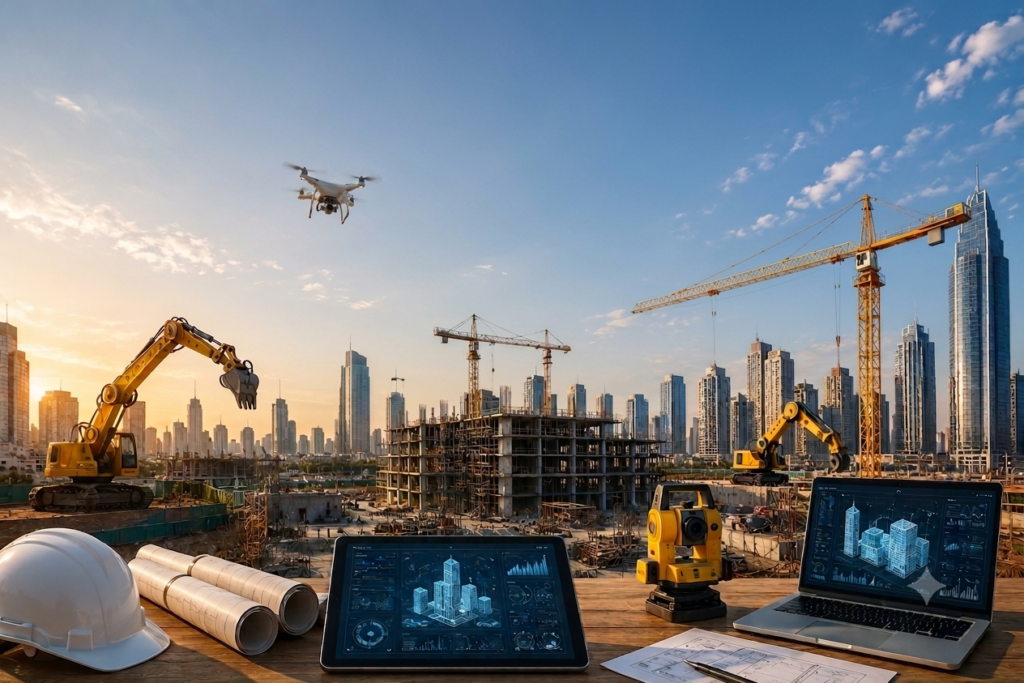
Smart construction technology integrates sensors, drones, connected devices, and AI-powered analytics to provide real-time visibility across projects.
Project managers can monitor progress, track safety compliance, and make faster decisions using digital dashboards and automated reporting systems.
Why Construction Professionals Need New Skills
Digital Transformation of Construction
The construction industry has traditionally been slower to adopt technology than sectors such as manufacturing and finance. However, increasing project complexity and labor shortages are accelerating digital transformation.
Professionals who understand digital construction tools will have a significant competitive advantage.
Changing Workforce Requirements
Employers are no longer looking solely for technical engineering knowledge. Modern construction professionals must understand data, software platforms, and emerging technologies.
As AI becomes more integrated into project delivery, technology literacy will become a core requirement.
Growing Demand for Technology Expertise
Companies across the Middle East, particularly those involved in mega-projects and smart city development, are investing heavily in digital solutions. This trend is increasing demand for professionals with BIM skills, data analysis capabilities, and AI knowledge.
Top 10 Most In-Demand Construction Skills in the AI Era
1. Building Information Modeling (BIM)
Building Information Modeling has become one of the most valuable construction technology skills in the industry.
BIM enables project teams to create intelligent digital models that improve collaboration, reduce errors, and enhance decision-making throughout the project lifecycle.
Why BIM Is Essential
- Improved project coordination
- Reduced design conflicts
- Better cost control
- Enhanced project visualization
Career Opportunities
- BIM Manager
- BIM Coordinator
- Digital Construction Engineer
- Virtual Design Specialist
2. Data Analytics and Interpretation
Construction generates enormous amounts of data. The ability to analyze and interpret that information is becoming increasingly valuable.
Using Data to Improve Project Outcomes
Data analytics can help organizations:
- Improve productivity
- Reduce waste
- Optimize schedules
- Enhance project forecasting
AI-Driven Decision-Making
Professionals who understand construction data analysis can support more informed business decisions and improve overall project performance.
3. AI and Machine Learning Fundamentals
Construction professionals do not need to become data scientists, but understanding AI fundamentals is becoming increasingly important.
Understanding AI Tools
Key areas include:
- Machine learning applications
- Predictive analytics
- AI-assisted scheduling
- Risk forecasting
Practical Construction Applications
AI is now being used for:
- Safety monitoring
- Quality control
- Progress tracking
- Resource optimization
4. Digital Twin Technology
Digital twins create virtual representations of physical assets that update in real time.
Real-Time Project Monitoring
Digital twins provide:
- Live performance insights
- Predictive maintenance capabilities
- Improved operational visibility
Asset Management Benefits
Infrastructure owners increasingly rely on digital twins to manage buildings, transportation systems, and industrial facilities throughout their lifecycle.
5. Construction Technology Management
Technology adoption requires professionals who can bridge the gap between construction operations and digital systems.
Managing Digital Tools and Platforms
Key responsibilities include:
- Software implementation
- Technology integration
- Change management
- User training
Technology Integration Strategies
Organizations need leaders capable of maximizing the value of technology investments across projects.
6. Robotics and Automation Systems
Robotics in construction is expanding rapidly.
Autonomous Equipment
Examples include:
- Autonomous bulldozers
- Automated surveying systems
- Robotic inspection tools
Robotics-Assisted Construction
Professionals with automation expertise will become increasingly valuable as adoption grows.
7. Cybersecurity Awareness
Connected construction systems introduce new cybersecurity risks.
Protecting Connected Construction Systems
Construction firms must secure:
- Project management platforms
- BIM databases
- IoT devices
- Cloud infrastructure
Managing Digital Risks
Cybersecurity awareness is becoming a critical competency for project leaders and technology managers.
8. Advanced Project Management
AI is transforming project management through automation and predictive analytics.
AI-Assisted Scheduling
Advanced software can:
- Optimize resource allocation
- Forecast delays
- Improve planning accuracy
Risk Management and Forecasting
Project managers who leverage AI can make more proactive decisions and improve project outcomes.
9. Sustainability and Green Building Expertise
Environmental performance is becoming a major priority across global construction markets.
Smart Energy Systems
Professionals with sustainability expertise understand:
- Energy-efficient design
- Renewable energy integration
- Carbon reduction strategies
Sustainable Construction Practices
Green building knowledge is increasingly important for large infrastructure and smart city projects.
10. Leadership and Adaptability
Technology alone does not guarantee success.
Managing Technology-Driven Teams
Leaders must help teams adapt to changing workflows and digital tools.
Continuous Learning Mindset
Professionals who embrace lifelong learning will be best positioned for future success.
Construction Jobs That Will Benefit Most from AI
Construction Project Managers
Project managers who understand AI tools can improve planning, scheduling, and risk management.
BIM Managers
BIM expertise continues to be one of the fastest-growing specialties in construction.
Construction Data Analysts
Organizations increasingly require professionals capable of transforming data into actionable insights.
AI Construction Specialists
This emerging role focuses on implementing and managing AI solutions across projects.
Smart Infrastructure Engineers
Smart cities and connected infrastructure projects are creating demand for engineers with digital expertise.
Skills That AI Cannot Easily Replace
Critical Thinking
Human judgment remains essential for solving complex project challenges.
Leadership
Construction projects require leaders who can motivate teams and manage stakeholders.
Negotiation
Contract negotiations and dispute resolution continue to rely heavily on interpersonal skills.
Problem Solving
Unexpected site conditions often require creative human solutions.
Client Relationship Management
Building trust and managing client expectations remain fundamentally human activities.
How Construction Professionals Can Develop These Skills
Certifications
Popular certifications include:
- BIM certifications
- Project Management Professional (PMP)
- Digital construction certifications
- Sustainability credentials
Online Training Programs
Professionals can develop technology skills through online learning platforms and specialized industry courses.
Industry Workshops
Industry conferences and workshops provide valuable networking and learning opportunities.
Practical Experience
Hands-on experience remains one of the most effective ways to build expertise.
Future Construction Career Opportunities
Emerging Job Roles
New roles include:
- AI Construction Manager
- Digital Twin Specialist
- Construction Data Scientist
- Smart Infrastructure Consultant
- Robotics Integration Engineer
Salary Potential
Technology-focused construction roles often command higher salaries due to increasing demand and limited talent availability.
Global Demand Trends
Governments and private developers worldwide are investing in smart infrastructure, sustainable construction, and digital transformation, creating strong long-term demand for skilled professionals.
Conclusion
The construction industry is entering a new era driven by artificial intelligence, automation, and digital transformation. Understanding The Most In-Demand Construction Skills in the Era of Artificial Intelligence is no longer optional—it is essential for career growth and long-term employability.
While technical skills such as BIM, data analytics, digital twins, and AI literacy are becoming increasingly important, human capabilities like leadership, critical thinking, and problem-solving remain irreplaceable. Construction professionals who combine technological expertise with strong interpersonal skills will be best positioned to succeed in the future workforce.
The future belongs to professionals who embrace innovation, invest in continuous learning, and adapt to the rapidly changing demands of the modern construction industry.