
Introduction
The construction industry is entering a new era of digital transformation, and one of the most impactful innovations driving this change is AI in Construction. From project planning and cost estimation to safety monitoring and predictive maintenance, artificial intelligence is helping construction companies work smarter, faster, and more efficiently.
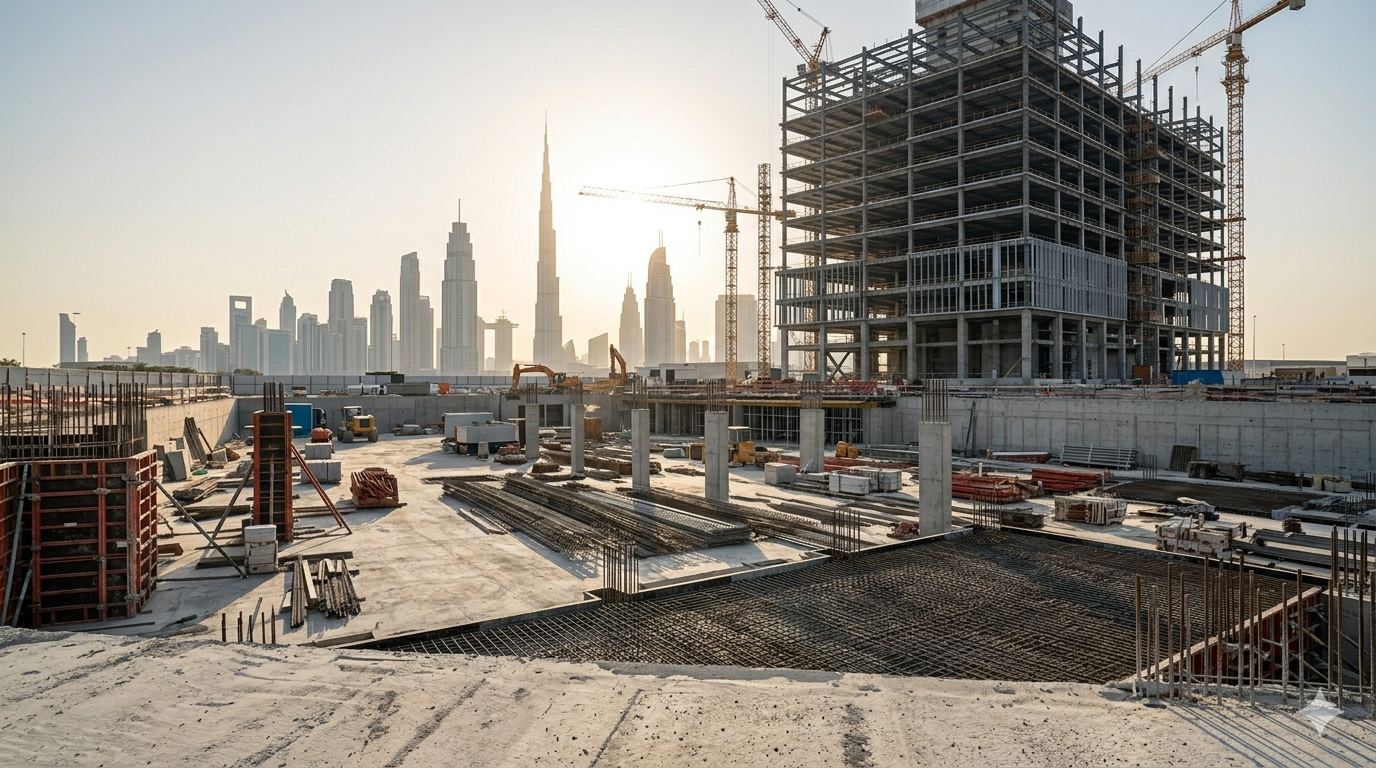
Across the Middle East, governments and developers are investing heavily in smart infrastructure, digital construction technologies, and mega projects. Initiatives such as Saudi Arabia’s Vision 2030, NEOM, and the UAE’s smart city developments are accelerating the adoption of Artificial Intelligence in Construction.
But what exactly is AI in construction, and why is it becoming a critical technology for the future of the industry?
What Is AI in Construction?
AI in Construction refers to the use of artificial intelligence, machine learning, data analytics, and automation technologies to improve planning, design, construction, operation, and maintenance processes throughout a project’s lifecycle.
In simple terms, AI helps construction professionals make data-driven decisions, automate repetitive tasks, reduce risks, improve safety, and increase productivity.
Unlike traditional construction methods that rely heavily on manual processes, AI-powered systems can analyze large volumes of data in real time to identify patterns, predict outcomes, and optimize project performance.
How Does AI Work in Construction?
Artificial intelligence works by collecting and analyzing data from various sources, including:
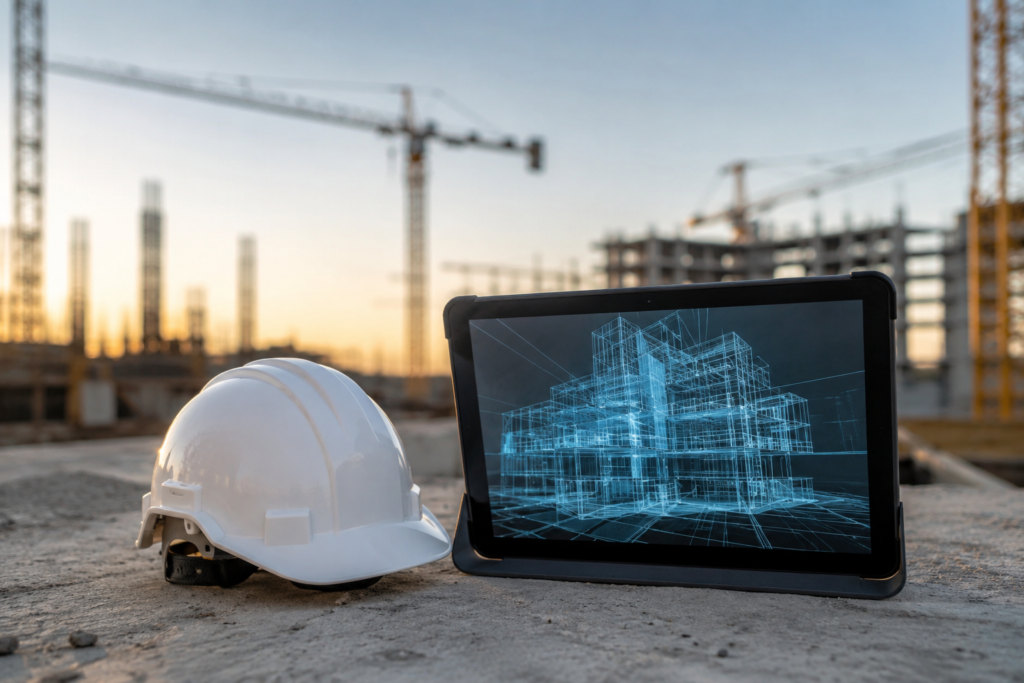
- Building Information Modeling (BIM) platforms
- Construction management software
- Drones and site cameras
- IoT sensors
- Equipment monitoring systems
- Historical project databases
AI algorithms process this information to generate insights, forecasts, and recommendations that support better decision-making.
For example, AI can analyze thousands of previous construction projects to predict potential delays, budget overruns, or safety risks before they occur.
Key Benefits of AI in Construction Projects
The growing adoption of AI Construction Technology is driven by its ability to solve many of the industry’s biggest challenges.
Improved Project Planning
AI helps project managers create more accurate schedules and resource allocation plans.
Benefits include:
- Better forecasting
- Reduced delays
- Improved productivity
- Efficient resource utilization
Enhanced Safety Monitoring
Construction remains one of the world’s highest-risk industries.
AI-powered safety systems can:
- Monitor worker behavior
- Detect unsafe conditions
- Identify hazards in real time
- Reduce workplace accidents
Many construction companies now use AI-enabled cameras and sensors to improve site safety.
Accurate Cost Estimation
One of the most valuable AI Applications in Construction Industry is cost prediction.
AI can:
- Analyze material costs
- Forecast labor expenses
- Identify budget risks
- Improve financial planning
This helps contractors avoid unexpected project overruns.
Better Quality Control
AI-powered image recognition systems can inspect construction work and identify defects before they become major issues.
This leads to:
- Higher-quality construction
- Reduced rework
- Improved client satisfaction
Predictive Maintenance
AI helps monitor equipment performance and predict failures before breakdowns occur.
Benefits include:
- Reduced downtime
- Lower maintenance costs
- Increased equipment lifespan
Major Applications of AI in Construction
AI-Powered Project Management
Modern AI Construction Management platforms can automate scheduling, reporting, and risk analysis.
Project managers can quickly identify bottlenecks and make informed decisions based on real-time project data.
AI and BIM in Construction
The integration of AI and BIM in Construction is transforming how projects are designed and managed.
AI enhances BIM by:
- Detecting design conflicts
- Optimizing building performance
- Improving construction sequencing
- Supporting predictive analysis
Together, AI and BIM create a smarter and more efficient construction workflow.
Construction Site Monitoring
Drones equipped with AI technology can:
- Monitor site progress
- Compare construction work against plans
- Identify delays
- Improve project tracking
This technology is becoming increasingly common on large-scale developments.
Risk Management
AI can analyze project data to identify risks related to:
- Safety
- Scheduling
- Budgeting
- Supply chains
This allows project teams to implement corrective actions before problems escalate.
AI in Construction Middle East
The AI in Construction Middle East market is experiencing significant growth as governments pursue ambitious digital transformation strategies.
United Arab Emirates
The UAE has positioned itself as a leader in smart construction and digital innovation.
AI is being used in:
- Smart city developments
- High-rise construction
- Infrastructure projects
- Facility management systems
Dubai’s focus on digital transformation is encouraging greater adoption of AI-powered construction technologies.
Saudi Arabia
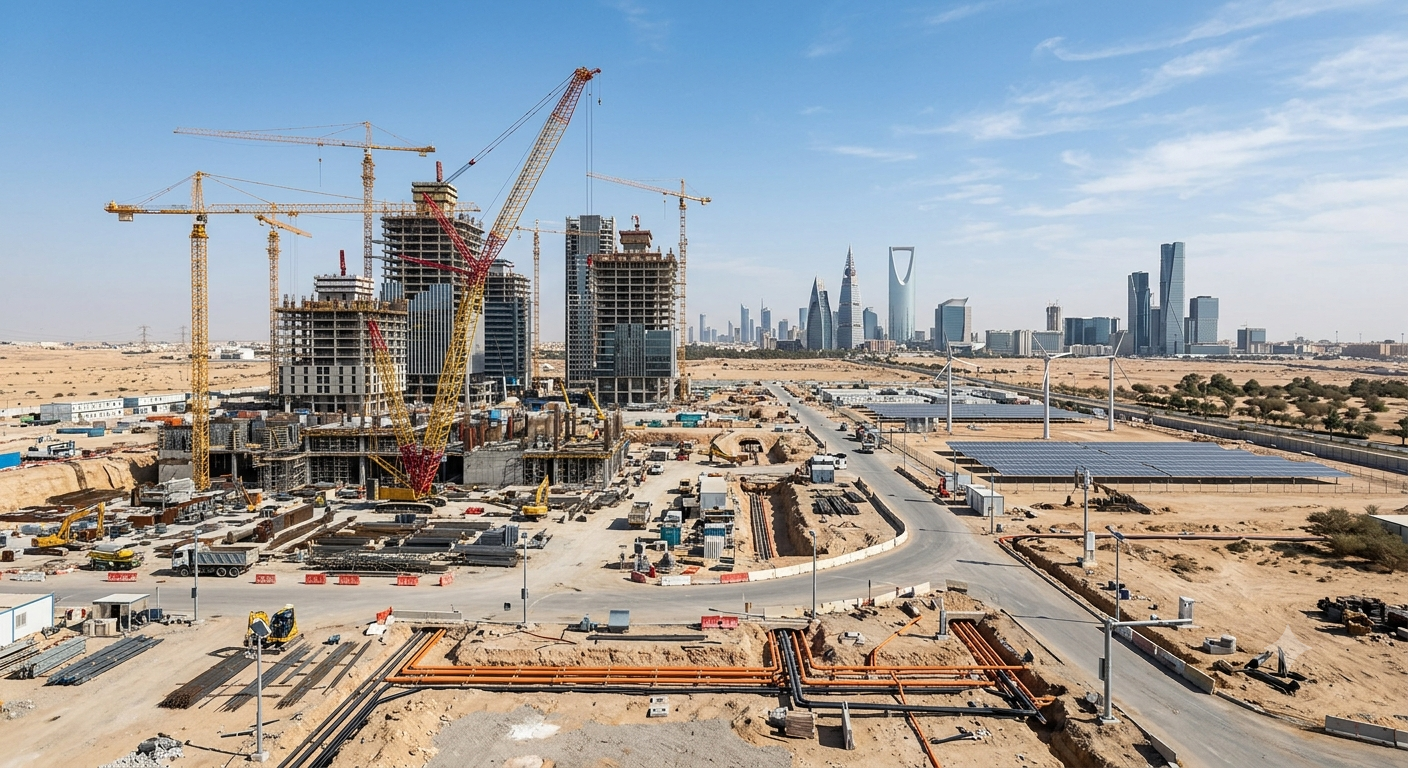
Saudi Arabia’s Vision 2030 initiative is creating unprecedented demand for advanced construction solutions.
Mega projects such as:
- NEOM
- The Red Sea Project
- Qiddiya
- Diriyah Gate
are leveraging AI, BIM, robotics, and data analytics to improve efficiency and sustainability.
Qatar and GCC Countries
Across the GCC, AI is supporting:
- Infrastructure development
- Transportation networks
- Commercial construction
- Smart building projects
As investment in digital construction continues to grow, AI adoption is expected to accelerate throughout the region.
Emerging AI Construction Trends 2026
The future of the AI Construction Industry extends beyond today’s applications.
Several innovations are shaping the next generation of construction technology.
Digital Twins
Digital twins are virtual replicas of physical assets.
Combined with AI, they help construction teams:
- Monitor performance
- Predict maintenance needs
- Improve operational efficiency
Robotics and Automation
Construction robots can perform repetitive and hazardous tasks with greater precision and consistency.
Examples include:
- Bricklaying robots
- Autonomous equipment
- Robotic inspections
Machine Learning
Machine learning enables systems to improve continuously by learning from historical project data.
Applications include:
- Risk prediction
- Cost forecasting
- Productivity optimization
Generative AI
Generative AI is beginning to transform design and planning processes.
It can:
- Generate design alternatives
- Optimize layouts
- Improve sustainability outcomes
These technologies are expected to play a major role in future construction projects.
How Construction Companies Can Implement AI
Organizations looking to adopt AI should follow a structured approach:
- Identify key business challenges.
- Invest in digital data collection.
- Integrate AI with BIM and project management tools.
- Train employees on AI technologies.
- Start with pilot projects before scaling implementation.
Successful adoption requires both technology investment and organizational readiness.
Frequently Asked Questions (FAQ)
What is AI in Construction?
AI in Construction refers to the use of artificial intelligence technologies to improve planning, design, construction, safety, project management, and asset maintenance.
What are the benefits of AI in construction projects?
The main benefits include improved productivity, enhanced safety, accurate cost estimation, predictive maintenance, risk reduction, and better decision-making.
How is AI used in construction management?
AI helps automate scheduling, resource planning, risk analysis, reporting, and project monitoring, improving overall project performance.
What is the relationship between AI and BIM?
AI enhances BIM by analyzing project data, detecting design conflicts, optimizing building performance, and supporting predictive project management.
What is the future of AI in construction?
The future includes greater use of digital twins, robotics, machine learning, generative AI, autonomous equipment, and smart construction technologies.
Conclusion
AI in Construction is transforming the way projects are planned, designed, built, and managed. By improving efficiency, reducing costs, enhancing safety, and supporting smarter decision-making, artificial intelligence is becoming a critical component of modern construction operations.
As the Middle East continues to invest in mega projects, smart cities, and digital infrastructure, the adoption of AI Construction Technology will accelerate across the region. Companies that embrace AI today will be better positioned to compete in tomorrow’s rapidly evolving construction landscape.
For more insights on construction technology, digital transformation, BIM, smart cities, and industry trends, explore our latest articles on Construction Middle East.
piijxoimsowglonlsxtlrnrglydmjg